
What chloramine is
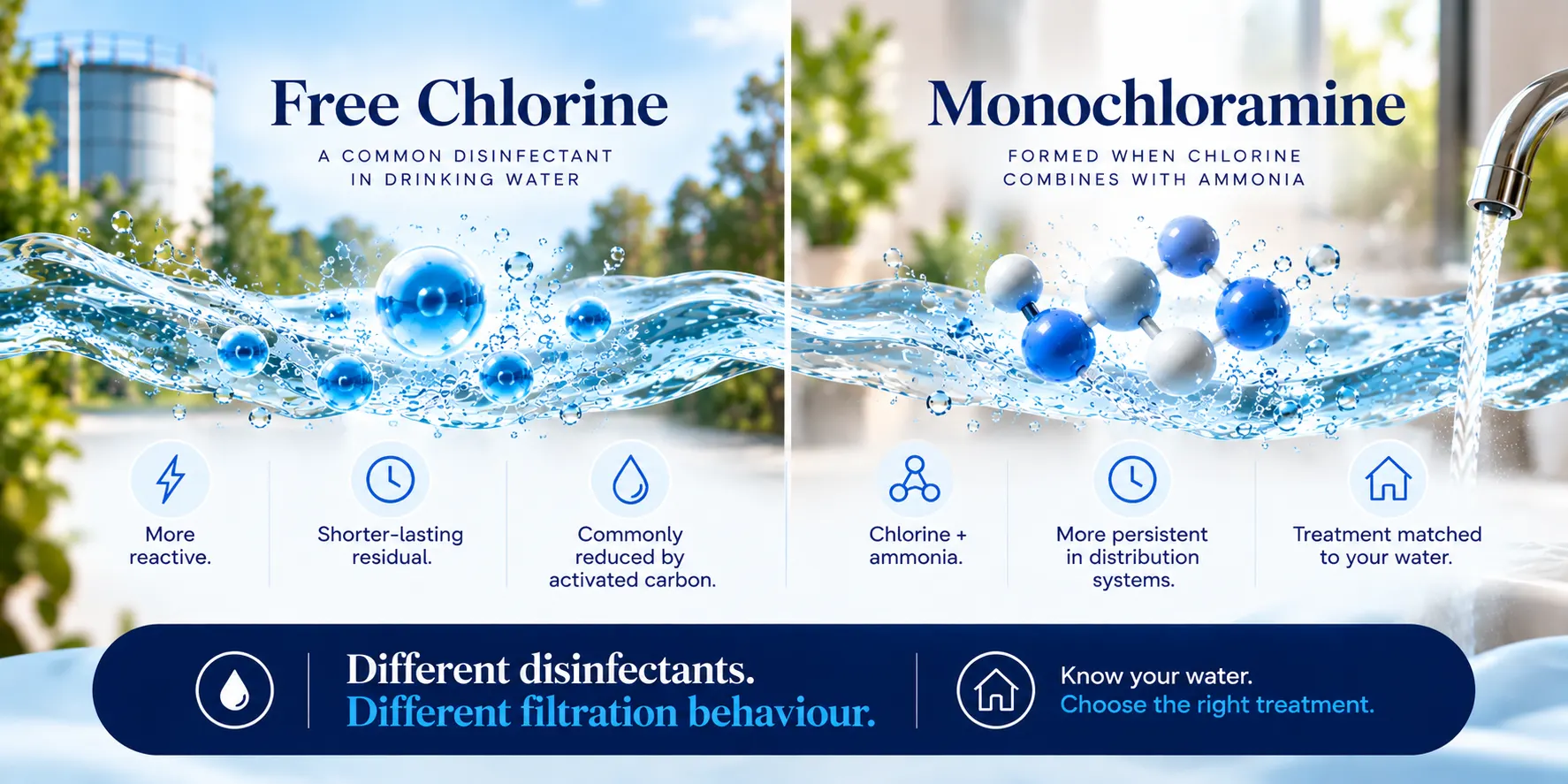
Chloramines form when chlorine reacts with ammonia. Monochloramine is the form most commonly used deliberately in drinking-water treatment because it is more stable than free chlorine and can persist further through long distribution networks.
The Australian Drinking Water Guidelines describe monochloramine as a drinking-water disinfectant and set a health-based guideline value of 3 mg/L for monochloramine.
Why it is different from free chlorine
Monochloramine is a weaker oxidant than free chlorine but persists for longer. That different chemistry matters when discussing household filtration. A filter that has strong free-chlorine performance should not automatically be given the same percentage claim for chloramine.
NHMRC notes that granular activated carbon can be used to remove monochloramine, but actual performance depends on media design and contact conditions.
Why this matters for buying decisions
Large filtration percentages can be misleading when the tested substance, flow and contact time are not identified. Ask any filtration provider whether a quoted percentage is for free chlorine, total chlorine, monochloramine or another test condition.
Sources and last reviewed
Last reviewed: September 2026.
This article is general educational information and does not replace water testing, utility advice, plumbing advice or health advice for a specific circumstance.