
Heavy metals is too broad a phrase
Different metals have different sources, guideline values and treatment behaviour. A broad claim such as ‘removes heavy metals’ can hide important differences between lead, manganese, copper, nickel and other substances.
NHMRC updated guidance on lead, manganese and metals/metalloids that can leach from plumbing products in June 2025.
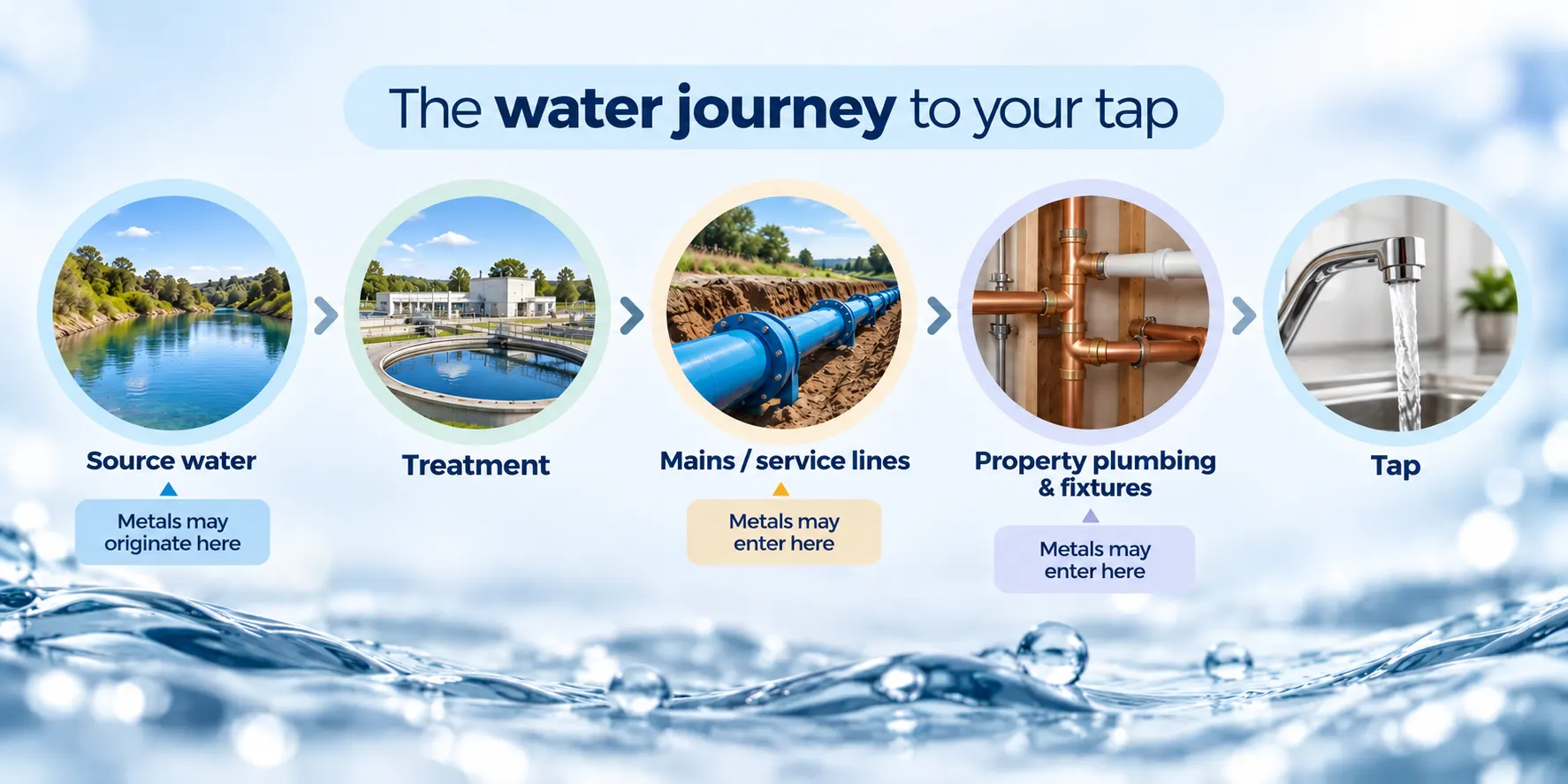
Water can change after the treatment plant
Drinking-water quality is managed by the supplier, but water also travels through reservoirs, mains, property service lines and internal plumbing. Some metals can arise from contact with plumbing products rather than from the original source water.
This is one reason a property-specific water concern should not automatically be blamed on the municipal source.
Treatment needs substance-specific evidence
Sediment filtration can capture particulate forms but does not automatically remove dissolved metal ions. Carbon media may have reduction capability for selected metals depending on formulation and conditions. Reverse osmosis can reduce many dissolved ions at point of use.
Sources and last reviewed
Last reviewed: September 2026.
- NHMRC — Australian Drinking Water Guidelines June 2025 updates
- NHMRC — Supporting information: lead, plumbing and manganese
This article is general educational information and does not replace water testing, utility advice, plumbing advice or health advice for a specific circumstance.