
What PFAS are
PFAS are a large group of manufactured chemicals valued for resistance to heat, stains, grease and water. Some PFAS are highly persistent in the environment.
Australia’s drinking-water guidance was updated in June 2025 after a review of current evidence.
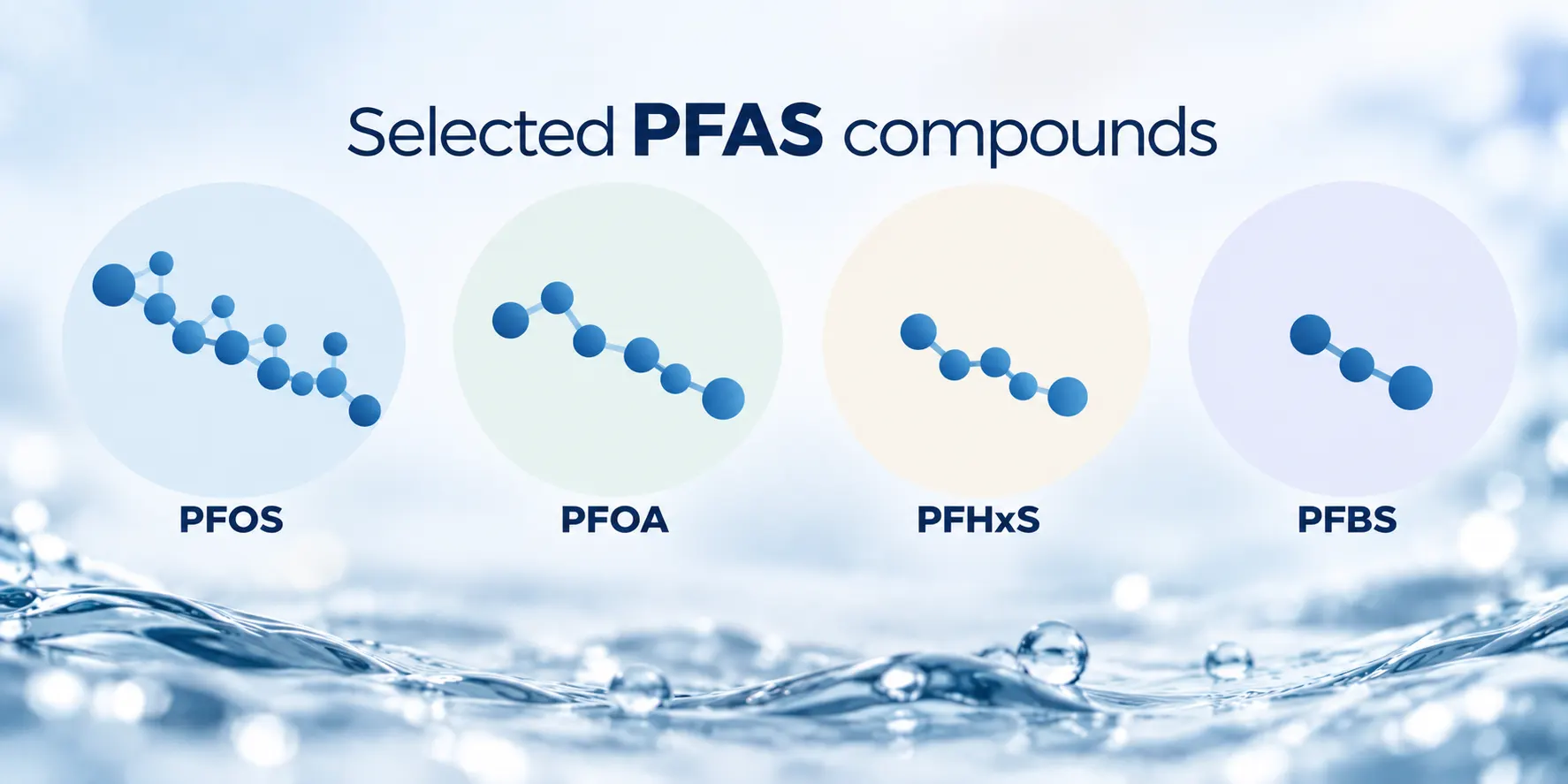
Current Australian guideline values
NHMRC’s June 2025 update sets health-based guideline values of 8 ng/L for PFOS, 200 ng/L for PFOA, 30 ng/L for PFHxS and 1000 ng/L for PFBS.
These are substance-specific drinking-water guideline values. They are not a statement that every Australian water supply contains PFAS at these levels.
Why blanket removal claims are a problem
‘Removes PFAS’ is too broad unless the provider identifies which PFAS compounds were tested, the influent concentration, flow, capacity, breakthrough criteria and test method.
Activated carbon and reverse-osmosis technologies can be relevant to PFAS treatment in some circumstances, but actual performance depends on the compound, media/membrane, water chemistry, contact time and capacity.
Sources and last reviewed
Last reviewed: September 2026.
- NHMRC — Updated Australian Drinking Water Guidelines (PFAS)
- NHMRC — Australian Drinking Water Guidelines
This article is general educational information and does not replace water testing, utility advice, plumbing advice or health advice for a specific circumstance.